WASHINGTON, D.C. – President Trump’s trade agenda has leveraged tariffs to open new market access for American producers and farmers and reverse decades-long tariff and non-tariff barriers to U.S. exports. In a recent hearing of the Ways and Means Committee with U.S. Trade Representative Jamieson Greer, Ambassador Greer noted that the trade deficit has fallen 24 percent since “Liberation Day” April 2025 as a result of President Trump’s America First Trade Policy. Committee members emphasized the need for aggressive, swift, and consistent enforcement of the trade agreements negotiated by President Trump and stressed the need for reforms to extend and strengthen the United States-Mexico-Canada Agreement (USMCA) and incentivize new investment and manufacturing in the United States.
USMCA Renewal Must be America First: “U.S. Manufacturers Must Be Treated the Same or Better”
Over the last six years since USMCA entered into force, some U.S. manufacturers continue to locate facilities in Canada and Mexico, rather than in the United States, in part to access imported inputs without paying U.S. tariffs. Chairman Smith urged the U.S. Trade Representative to ensure the joint review of the USMCA prioritizes reforms that incentivize building new manufacturing facilities here at home.
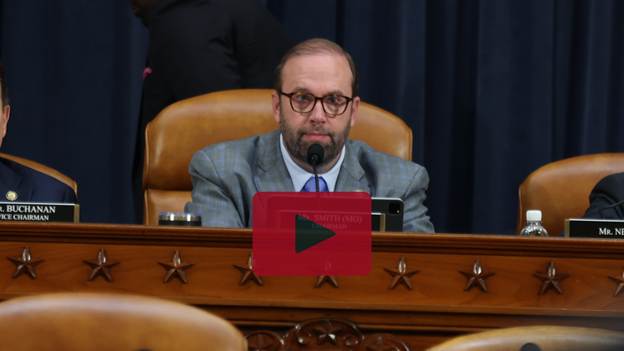
Chairman Jason Smith (MO-08): “Assuming the issue is on your radar, what is the Administration prepared to do to keep those manufacturing jobs here and close the loopholes in USMCA that might provide incentives to ship jobs out of the United States?”
Ambassador Jamieson Greer: “Thank you, Mr. Chairman. If you look at what’s happened over the past few months, Mexico has taken some important steps to help get at this issue. There’s much more to do. Mexico, on its own, has decided to raise tariffs on certain products from China and Vietnam and certain other economies, and this is because Mexico itself understands that it needs to be better aligned with the United States on trade policy to avoid the kinds of issues you’re talking about, to avoid subsidized products coming in from Asia and elsewhere and undermining the North American market…We need to adjust the rules of origin. In Trump’s first term, working with this committee, we adjusted rules of origin for automobiles, and that drove more investment in automotive production in the United States. We need to take that same model and we need to take it to other goods as well… to make sure that our manufacturers have an incentive and a comparative advantage relative to others.”
…
Chairman Smith: “This is a huge priority of mine, especially in looking at the review of USMCA. I want to make sure under all circumstances, U.S. manufacturers are treated the same or better than other manufacturers in Canada or Mexico or China.”
Trump Administration Will Fight for American Producers: “Mexico and Canada Have to Understand that We Will Act”
USMCA’s dispute resolution settlement was designed as a fair and efficient resolution mechanism, but prompt resolution of disputes requires political will from the U.S. Government. American corn growers prevailed in their dispute with Mexico over market access, but only after an extended multi-year process. More broadly, the Biden Administration’s lack of aggressive usage of the dispute settlement system undermined the value of USMCA for American businesses and workers. The Trump Administration is prioritizing reforming and improving the USMCA dispute settlement system while continuing to hold trading partners accountable for their failure to live up to trade agreement obligations.
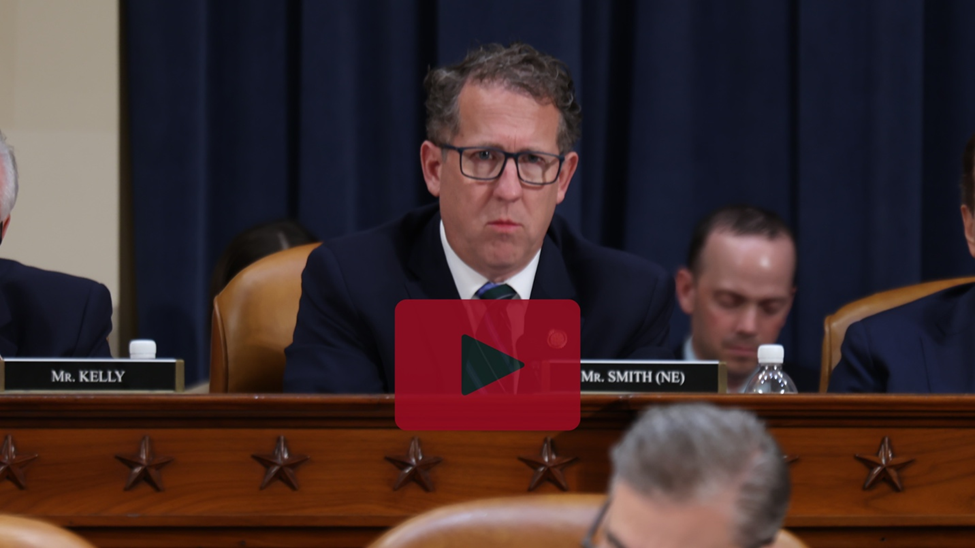
Rep. Adrian Smith (NE-03): “We know the dispute settlement mechanism is particularly valuable in USMCA. I was disappointed to see how long it took on the biotech corn dispute with Mexico, but ultimately we prevailed, I’m happy to say, on all those various factors. I was just wondering what you might be thinking about the dispute settlement mechanism as you enter into discussions with Mexico and Canada. Are there opportunities to make it more efficient?”
Ambassador Jamieson Greer: “Yes, I think there are opportunities to make it more efficient…I think even more important than making sure that the mechanism works is making sure that we have the political will to actually enforce the agreement. I think under the Biden Administration we saw slow and limited enforcement. Our energy companies had a lot of problems in Mexico during that time, and eventually consultations were started, but no case was ever brought. I think you have to make sure the mechanism works, and I think the bones for it are there, and we can do some things to make it more efficient, but you have to have the political will as well. Mexico and Canada have to understand that we will act if they don’t honor their commitments.”
Allies Are On Notice About Discriminatory Digital Services Taxes
Digital services taxes (DSTs) have proliferated in recent years as a means for foreign governments to turn the global strength of American technology companies into new revenue streams for their own countries. The Trump Administration has taken a strong stance against DSTs for their unfair targeting of U.S. companies. In his first term, President Trump briefly imposed tariffs in response to a French DST and directed Section 301 investigations of many other DSTs, and in his second term, the President successfully persuaded Canada to repeal its DST. The Trump Administration is continuing to consider all possible means of leverage to pressure trading partners to alter and remove these unfair taxes.
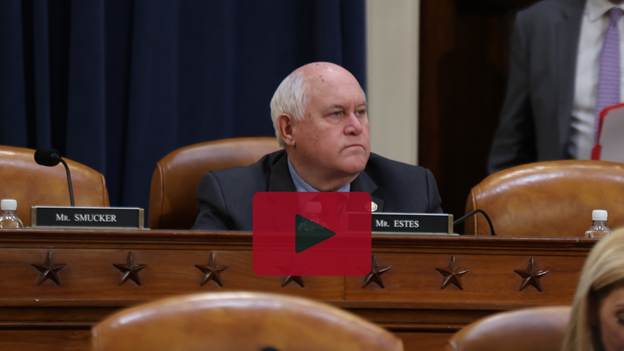
Rep. Ron Estes (KS-03): “USTR has previously identified digital services taxes as one of the most discriminatory policies that other countries are pursuing against American companies. Would you give us an update on where the negotiations are with some of these other countries on rolling back the existing DSTs and preventing additional countries from pursuing them?”
Ambassador Jamieson Greer: “I had the trade minister of Poland in my office about a week ago, and there has been a proposal in Poland to establish a digital services tax. I actually pulled out a copy of the report on the French digital services tax from the first term that resulted in tariffs on France, and I showed it to him. I said, ‘I really don’t want to be in a situation where I have to put out a report that says Poland here instead of France,’ and I think he received the message, so we’re watching that very closely. It hasn’t come into play. With Canada, they implemented it immediately. We worked with them to get it down, and they just repealed that a few weeks ago. We are seeing progress on this front. We’re working with our European partners right now on this. We know that the Turks have this as well. They know we have strong, strong concerns. They know we have 301s available to us as well.”
Trump Administration Commits to Longer Extension for HOPE/HELP and AGOA
The African Growth and Opportunity Act (AGOA) trade preference program was recently extended for one year after strong, bipartisan support from the Ways and Means Committee and leadership by Chairman Smith. The program serves both U.S. economic and national security interests given Africa’s vast deposits of critical minerals and China and Russia’s continued aggressive approach on the continent. The HOPE/HELP preference program for Haitian textiles also serves U.S. interests by supporting political and economic stability in a notoriously volatile nation in our backyard. Ambassador Greer committed to continuing to work with Congress to secure an extension for AGOA and a path forward for HOPE/HELP for Haiti that prioritizes stability.
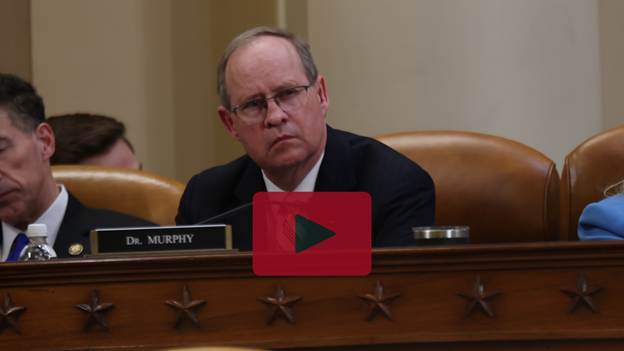
Rep. Greg Murphy (NC-03): “What is your position and hope of establishing a long-term extension of HOPE/HELP and would you support a longer extension, three years, five years, maybe hopefully 10 years?”
Ambassador Jamieson Greer: “We understand the significance of Haiti’s textile industry in relation to ours and cotton, etc., so I think to the extent that there’s going to be movement on AGOA, on extension to AGOA, I think it makes sense what you’re talking about to try to couple those together. I think that in terms of a preference package, I think we should work together on that front. I don’t know what the extension would be, but we’re obviously open to a number that makes sense.”
USMCA Negotiation Holds Hope for Resolving Longstanding Dairy Dispute
In USMCA, Canada agreed to increase dairy market access for U.S. farmers. However, in practice, U.S. dairy farmers have been effectively blocked from selling additional products to Canada by non-tariff barriers that impede access to the Canadian market. The Biden Administration was unable to resolve this problem, but the Trump Administration has publicly stated that this is a priority issue within USMCA joint review. Additionally, the Trump Administration has taken further steps to support U.S. dairy exports globally, and the greater market negotiated in these new trade agreements has led to a significant increase in dairy exports. The USMCA joint review could be an opportunity to resolve the dairy dispute once and for all, securing the market access negotiated by President Trump for U.S. farmers.
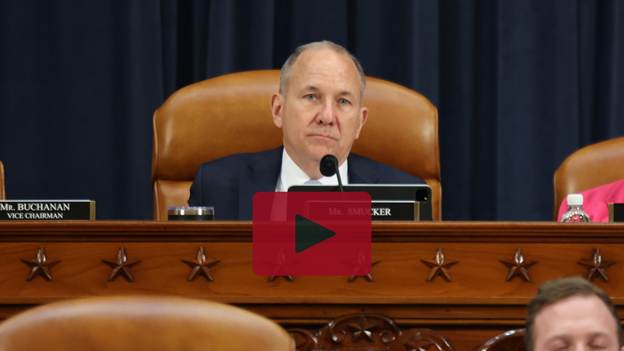
Rep. Lloyd Smucker (PA-11): “What enforcement actions is USTR taking in regards to dairy?”
Ambassador Jamieson Greer: “First of all, this has been a key area for the Administration. In many of our agreements, we’ve secured new and additional market access overseas, so this is a big win for dairy. We had a double-digit increase in dairy exports last year. That’s a good news story. On Canada, in particular, this is another issue we’ve raised with the Canadians. Either we have to resolve it very soon, in the context of USMCA negotiations, or we’ll have to resolve it through an enforcement action.”