WASHINGTON, D.C. – During a Ways and Means Committee hearing focused on federal tax policy in the growing business of sports, Republican and Democrat members took aim at the wide range of tax benefits available to sports team owners. Committee members expressed bipartisan frustration at the repeated pattern of corporate professional sports teams using tax-exempt municipal bonds and other taxpayer subsidies to relocate and/or construct billion-dollar stadiums with negligible economic benefit for local communities. The Committee’s Ranking Member noted that fans are unhappy with the current state of live sports, 67 percent of whom say attendance is unaffordable and another 86 percent deem it a luxury experience, according to a YouGov poll.
House Republicans sought to curb taxpayer subsidies for billionaire sports team owners in the House-passed version of the Working Families Tax Cuts by capping the amount of intangible assets, like player contracts, broadcast agreements, and goodwill, that a professional sports franchise can deduct from federal taxes.
At the same time, college athletics is undergoing a revolution in the era of student-athlete compensation for their Name, Image, and Likeness (NIL). Members and witnesses focused on the need for financial literacy for college-athletes, particularly regarding taxation rules.
Chiefs, Rams, Eagles, Oh My: Economies of Loyal Fan Bases Lose When Pro Sports Teams Chase the Best Deal, While Taxpayers Foot the Bill
For decades, professional sports teams have repeated the same tactic of forcing multiple states and local jurisdictions to compete in a “race to the bottom” so that the franchises can receive the most favorable tax package possible. Missouri’s two NFL teams, the now-Los Angeles Rams and Kansas City Chiefs, demonstrate this trend. Taxpayers in St. Louis are still paying for an 82,000-seat football stadium that last saw a home game in 2015, while their Kansas City counterparts are scheduled to move into Kansas at the cost of $1.8 billion on the taxpayer’s dime. These relocations mean taxpayers in competing cities forfeit significant tax revenue while loyal fan bases and the economies built around professional teams are left behind.
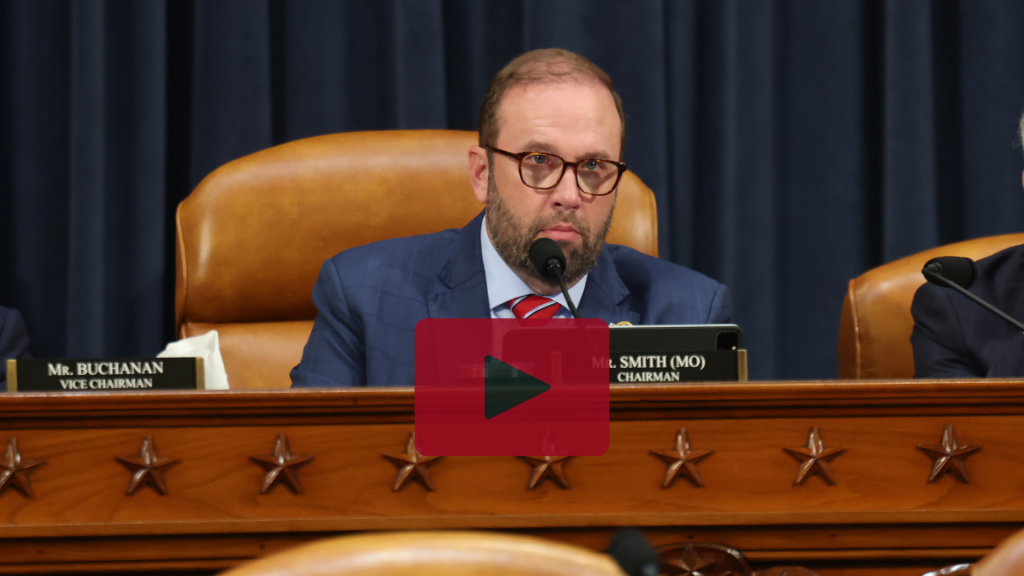
Chairman Jason Smith (MO-08): “When the owners of the Kansas City Chiefs abandoned Missouri and their local fan base to move across state lines to Kansas, it was a clear-cut example of a sports franchise putting corporate interest ahead of the interest of a community in which it has thrived for over six decades. Many franchises have made similar relocation decisions due to the availability of tax-exempt municipal bonds to finance the construction of new stadiums at taxpayer expense, and countless more have leveraged communities to achieve generous subsidies that pad teams and owners’ bottom lines, but do little for the surrounding communities. In recent months, just in the NFL, we have seen this dynamic play out with the Chicago Bears and Philadelphia Eagles. We’ve also seen this in Major League Baseball, where Kansas City had to build the Royals a new stadium…What impact do the relocation decisions ultimately have on the communities that are abandoned by sports franchises leaving town?”
Dr. Dennis Coates, sports economics expert: “I think that there’s two classes of relocation, and Missouri is a perfect example of both of those. One of those is the case of the Rams, where a team comes in from out-of-state and then leaves for another state. The other is the case of the Chiefs, where essentially the team has moved across state lines, but is still within the same metropolitan area. The two situations are similar, but they’re also quite different…How is it that they’re better off in Kansas? If you believe that there are large economic benefits from having the stadium there, then they’re going to generate those kinds of benefits in Kansas, as opposed to in Missouri. I don’t believe there are such benefits, and I will be happy to talk about the evidence for that. So, in that regard, I don’t think Kansas is really getting anything, except for the bill. The flip side of that is, what’s Missouri losing? And the answer is, well, there were businesses there. Those businesses that built up around Arrowhead that catered to the fans going to Arrowhead probably will have fewer patrons specifically on game days. Those businesses will lose.”
“Players Need Advocates, Not Fans”: College Athletes Need Financial Literacy
The Name, Image, Likeness (NIL) system is worth approximately $2.3 billion with more growth expected, turning young college athletes into millionaires overnight. A lack of basic financial knowledge, like rules governing tax withholding and investing, too often plays a role in the disappearance of this financial windfall. Most universities do not provide financial training that could help student-athletes build long-term wealth from their sports earnings. Several witnesses emphasized the need for more professionals and advocates whose sole interest is the financial security of college players.
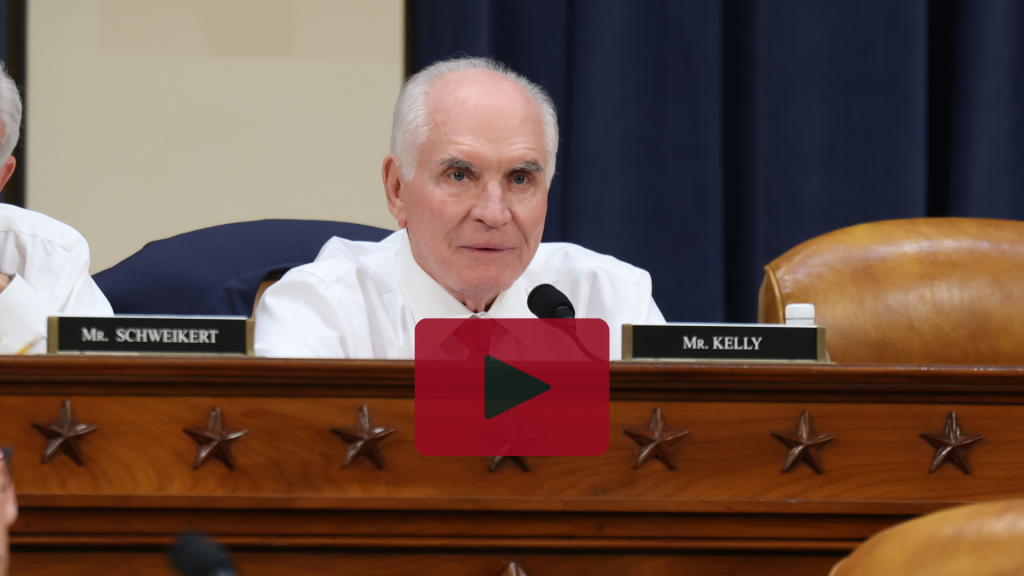
Rep. Mike Kelly (PA-16): “What can we do? What can we do to make it more understandable about what this is?…Is there anything that would simplify this?…Mr. Acho, I want to thank you. What you’re doing is incredibly important for these young people.”
Sam Acho, former NFL player and ESPN commentator: “I think that players need advocates, not fans…Players need more advocates for them, maybe people in these seats who can help them pay their taxes, understand responsibility. That’s important. But also help them understand that you’re more than just what you do on a football field or a basketball court…In my position, that’s why I do what I do, is I want to be the most trusted advisor in an athlete’s life. I want to be able to speak up for those who cannot speak up for themselves…because the schools are not doing it, nor are the coaches.”
Americans from Mobile, Alabama Shouldn’t Pay for New Chicago Bears Stadium
The Chicago Bears’ potential relocation to northern Indiana – the latest professional team to be offered generous government subsidies and special tax cuts for a new home – highlights problems plaguing public financing of sports stadiums. Americans who live far from a team’s stadium indirectly subsidize that team’s move, while the local community housing the new stadium may receive far less economic benefit than touted in team-sponsored economic analysis. Time and time again, economic benefit analyses commissioned by sports teams frequently overrepresent the actual benefit that the stadium will provide. Dr. Dennis Coates, a sports economics expert, testified that when calculating the true economic benefit for a municipality provided by a new sports stadium, a good rule of thumb is to slash the team’s projected figure by 90 percent.
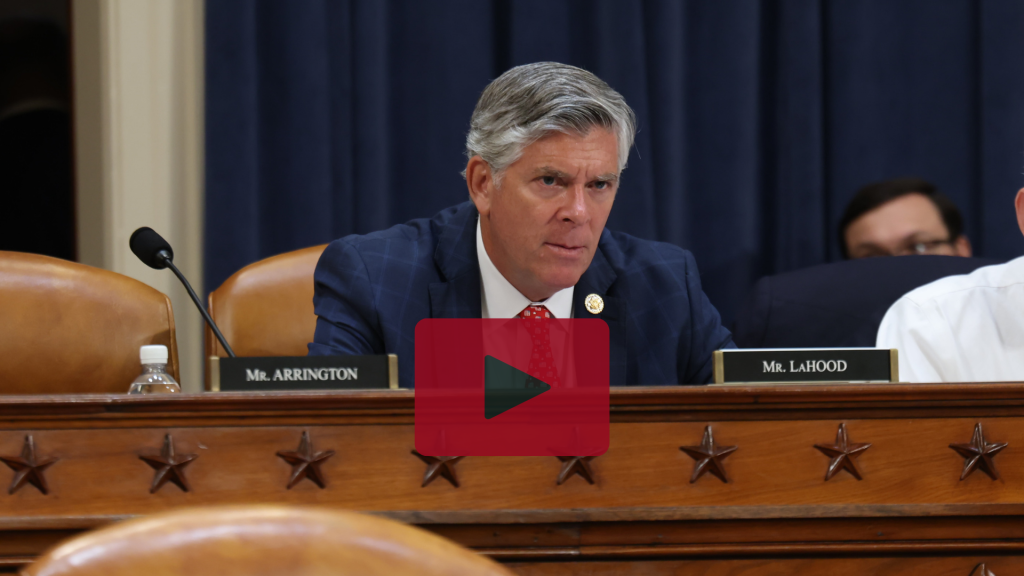
Rep. Darin LaHood (IL-16): “From a taxpayer perspective, what should be top of mind for taxpayers as we look at this debate between Indiana and Chicago?”
Dr. Dennis Coates, sports economics expert: “I want to distinguish between the federal taxpayer and the taxpayers of Illinois and Indiana. The federal taxpayer, in general, is footing some of the bill for wherever the Bears end up. My first question would be: is there any particular reason that somebody from Mobile, Alabama should pay for the stadium in Chicago or Hammond, Indiana?
…
“My reaction would be, let’s ask Chicago, let’s ask the people of Indiana, if this is what they want their tax dollars going for. Let’s tell them the truth. Let’s not have an economic impact report produced by the Bears to say what the value of the Bears is to Chicago…No independent researcher ever believes the results that come from an economic impact report produced by a stadium proponent.”
College Athletics Look More Like For-Profit Professional Sports
The explosion of money surrounding college athletics, particularly through Name, Image, Likeness (NIL) compensation, has led college athletic departments to behave more like their professional for-profit counterparts. A NIL expert witness testified that some funding structures potentially contemplated by college athletic departments, like a separate department with hedge fund backing, would likely not be eligible for tax-exempt status that otherwise comes with their affiliation to institutions of higher education.
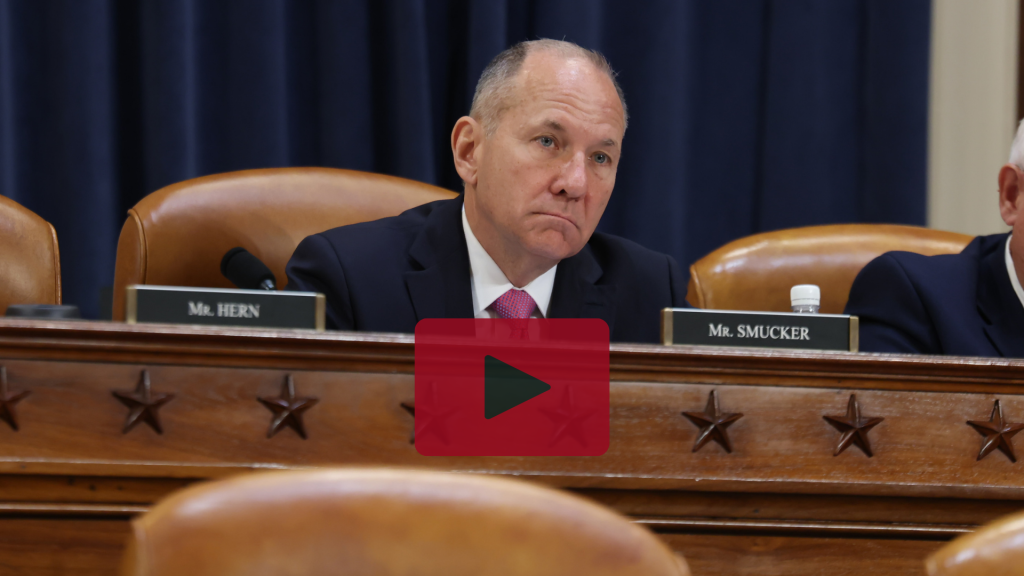
Rep. Lloyd Smucker (PA-11): “As we’ve seen, the business of college athletics dramatically grow in recent years. They’re looking more and more like professional teams, which certainly in almost all cases, they are for-profit companies. The leagues are as well. Should we be looking at that relationship? Does it still make sense to allow some of the large college programs to be nonprofits?”
Thad Madden, NIL Tax Consultant: “I haven’t seen the books or records or tax returns of any universities, but I do know that some schools, some power conference schools, are looking into, and some have actually initiated, having their athletic departments form their own business entities. Part of the reason for that is to bring in private equity to help fund them. I also know from reporting, and talking to some administrators, that many of the major power conference schools, the powerhouses are operating at significant deficits year after year. It’ll be interesting to see how that plays out going forward, but I don’t think a separate athletic department could have tax-exempt status. I don’t see how that could be a possibility.”
“Jerry Jones Gained for Sure”: Tax-Exempt Bonds Line Pockets of Wealthy Sports Team Owners
Of the 57 new stadiums built over the past 20 years, 43 were built using tax-exempt bonds at a cost of $4.3 billion to taxpayers. The Dallas Cowboys, who moved their stadium from Irving, the city where Ways and Means Committee member Representative Beth Van Duyne served as mayor, to a neighboring city illustrates the massive cost to taxpayers at the local and federal level while creating little economic impact.
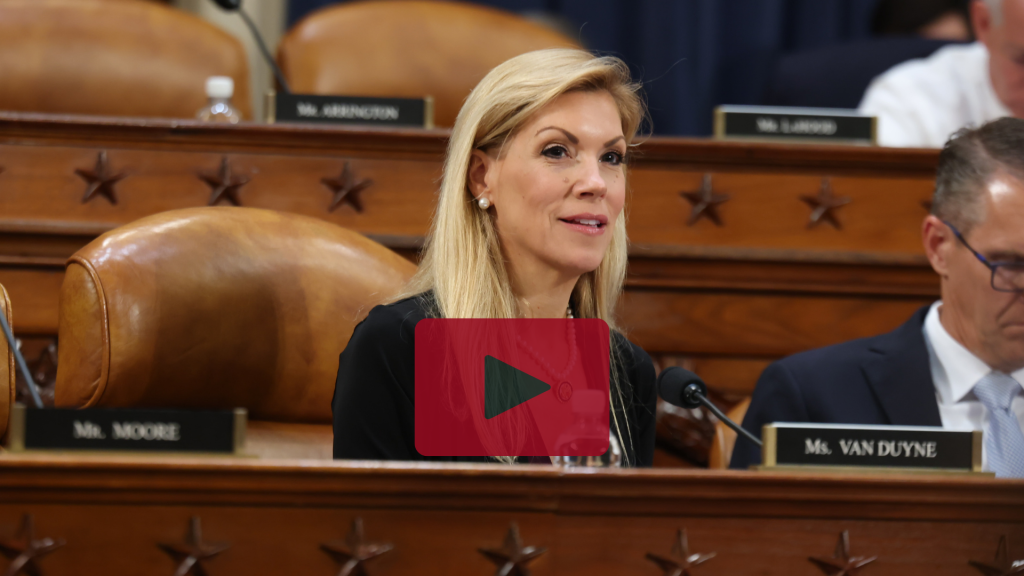
Rep. Beth Van Duyne (TX-24): “Before I entered Congress, I was actually on the city council in Irving, Texas…Texas Stadium [Dallas Cowboys stadium] was owned by the city of Irving, which meant that they didn’t have to pay any property taxes on it…The only thing really that the city got from it was $1.5 million a year in a lease. That $1.5 million was put into a Texas Stadium fund to pay for the maintenance of that stadium. When the owner decided to move to a different city, that was scrubbed. When we were having to face the dilemma, did the city pay what they were asking for at that time, which was going to be $325 million for the price of a new stadium. If you added interest and fees, about $490 million…We had to choose between either funding our public transit system or not. That’s where those dollars were going…
“Tax-exempt municipal bonds subsidize these projects based on optimistic projections. Federal taxpayers help underwrite outcomes that frequently fall short. As we examine sports industry tax rules, we really need to consider stronger independent verification of economic claims, greater accountability, and reforms to better align federal tax advantages with verifiable net public benefits…In your opinion, who would you say in Texas gained and who lost in the Cowboys’ relocation from Irving to Arlington?Dr. Dennis Coates, sports economics expert: “Jerry Jones gained for sure. There’s no doubt about that…I find it interesting that you mentioned that you take in more money on game day now than you did, and I think that’s not terribly surprising, but very few people ever mentioned such a thing.”