
WASHINGTON, D.C. – Medicare’s coverage and reimbursement policies for chronic kidney disease (CKD), and its most severe form, end-stage renal disease (ESRD), are impeding the delivery of proven, innovative treatment options that can improve patient health, the Ways and Means Health Subcommittee learned at a hearing that examined how to enhance care for kidney patients.
Medicare spends a disproportionate share on kidney care. At $50 billion annually, the cost of treating patients suffering from ESRD constitutes seven percent of Medicare expenses, yet ESRD patients represent only one percent of Medicare beneficiaries. Kidney care has not had the advancements seen in treating other diseases, in part, due to Medicare’s ESRD payment bundle that encourages consolidation in dialysis care and stifles innovation. To date, Medicare has awarded coverage to just four new ESRD drugs – half of which are no longer widely available – and only one new medical device. Meanwhile, Medicare is not doing nearly enough to encourage proactive treatment interventions that improve patient health and quality of life – including at-home dialysis, early screening tests, and kidney transplants.
For Kidney Patients, Prevention is Often Too Little, Too Late
In over 50 years since Medicare began covering dialysis services for all ESRD patients, our nation’s health system has failed to adequately catch patients before their kidneys fail – a tragedy worsened by the reality that most cases of ESRD are preventable. Diabetes and hypertension together – both preventable and manageable chronic diseases – account for 75% of new ESRD cases each year. Unfortunately, the Medicare program does not properly emphasize catching the disease early enough to make a difference for patients who need dialysis after it is too late to save their kidney function.
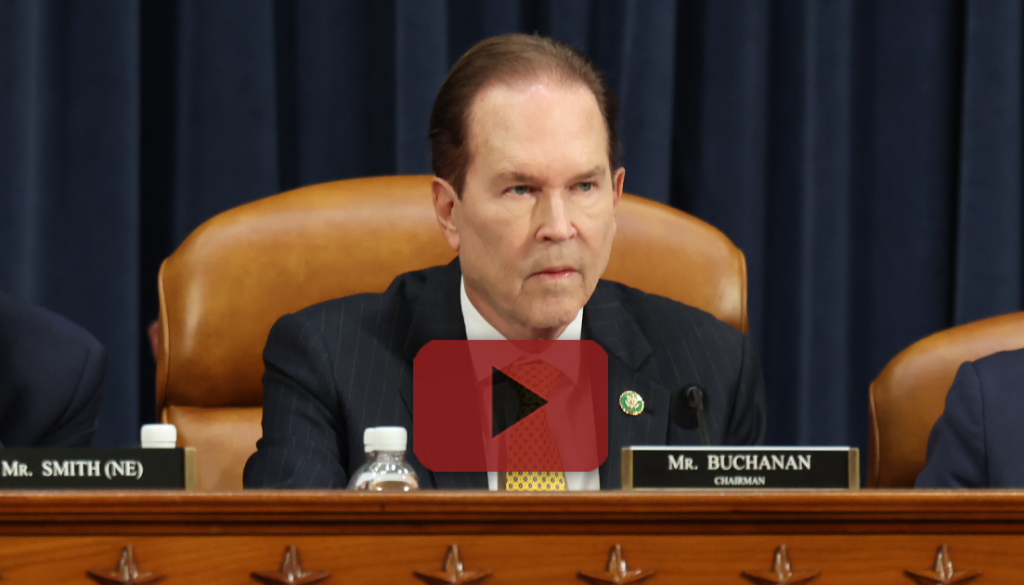
Rep. Vern Buchanan (FL-16): “Dr. Watnick, I was surprised to learn that many cases of CKD and ESRD are preventable chronic diseases. We keep spending more on health care, yet you can make the argument we get sicker as a nation. We must reduce the cost of chronic diseases in terms of that burden in the United States. How do you, when you look at chronic diseases impact kidney health, what can Congress do to support better kidney health care through chronic disease management?”
Dr. Suzanne Watnick, nephrology expert: “There’s a lot we can do. I would start with saying is that we need to start upstream. We want people never to walk through those dialysis treatment doors. How can we make sure, first of all, that we know people even have kidney disease, so making sure that we’re advocating for screening. Nine out of 10 people with kidney diseases aren’t aware that they have it. Anything we can do to ensure that upstream care is recognized is a benefit.”
Home Dialysis Testimonial: “It Allowed Me to Be Able to See My Kids Everyday”
Only 15 percent of dialysis patients receive treatment at home, even though at-home patients experience faster recovery times, fewer side effects, and higher survival rates compared to traditional dialysis in a center. For rural patients, at-home dialysis can be a literal lifesaver when in-center dialysis may require a multi-hour car trip to the nearest clinic. One witness even went so far as to call in-clinic dialysis for rural Americans “a part-time job that you never signed up for.” In response to Chairman Smith, a preschool teacher shared how receiving dialysis at home, supported by caring health professionals, allows her to continue working.
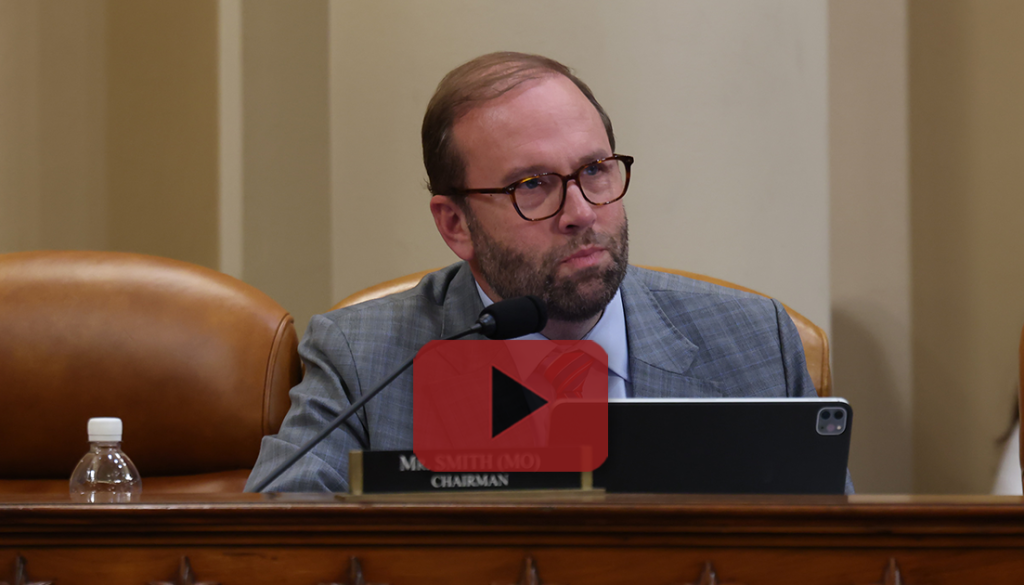
Chairman Jason Smith (MO-08): “I am only here in Congress today because a very close family friend once convinced me – a son of an auto-mechanic, and a preacher, and a factory worker from a small town in southeast Missouri – could make a difference in politics. He suffered terribly from ESRD – eventually, the disease took his life. His battle with ESRD is a solemn reminder of the important work this committee and this Congress must do to help Americans struggling with chronic disease. All of us around this room have a personal connection to this disease. I feel strongly a responsibility to follow in his memory, and to the hundreds of thousands of patients suffering from this disease, to take action to ease their pain, improve the care they receive, and, above all, give them hope…Can you talk a little bit about how transitioning from an in-center to an at-home dialysis impacted your quality of life with being able to work and care for your young students?”
Ms. Ashli Littleton, home dialysis patient: “It was a real easy transition, because I had a good support team, from my medical team to my mom at home. I was able to make the transition quite well, and it allowed me to be able to see my kids every day, which is the best part of my day, teaching my little children. It wouldn’t have been possible without the staff that I had with DCI, and their support and encouragement with it, and their trust, that I could do it on my own every day as well.”
Medicare Payment for Dialysis Kills Innovation and Limits Patient Access to Better Treatments
Medicare provides a flat payment, known as the ESRD “payment bundle,” to dialysis providers. The payment’s static nature often precludes dialysis providers from being able to give patients new, innovative drugs because the provider solely bears the cost. Under Medicare’s bundle, all costs end up rolled into a one-size-fits-all payment, with only meager incentives to encourage providers to take up a new or innovative drug. This dynamic prioritizes complacency over innovation in dialysis treatment and has kept care for patients frozen in time as other disease states continue to consistently see advances in research, development, and investment in new and innovative treatments.
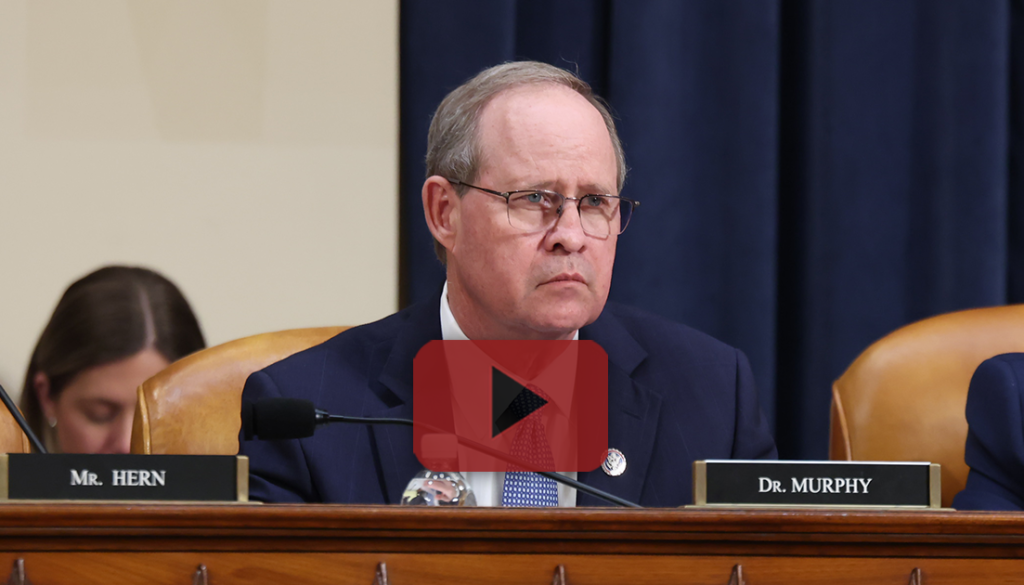
Rep. Greg Murphy (NC-03): “Mr. Butler, I think it’s really great for people to understand what this bundle means – that dialysis centers get paid one fee for everything. Will you explain how that has caused problems with being able to really grow innovation, take care of patients better, the fact that you limit this money. I will say this: this is what “Medicare-for-All” looks like…limiting money for a bundle, that’s what “Medicare-for-All” looks like.”
Dr. John P. Butler, President and CEO, Akebia Therapeutics:“For fee for service patients, a dialysis provider gets roughly $280 for every time the patient sits in the chair, if you will, in the dialysis center. And from that, they have to do the skilled care, drugs, everything comes from that bundle.
“The idea that you bring in a new, innovative product. Our product…treats anemia in patients. It’s based on Nobel Prize winning science. It is highly unique. We just presented data…that showed that if every eligible patient was treated with our product, there’s the potential to save almost $2 billion in hospitalization costs, but that isn’t part of that bundle. The dialysis providers have to decide how to allocate care based on the $280.”
Rep. Murphy: “They get a piece of this pie, and you say you spend it as best as possible. But, if there’s a new drug that’s wonderful and innovative and great, you can’t afford it, you can’t access it.”
“Disheartening to Hear”: Medicare Incentivizes Expensive Dialysis Over Early Detection
CKD can be detected before progressing into ESRD through tests and evaluating patients who have risk factors like hypertension or diabetes. Medicare can spend less on patients who have their kidney disease detected earlier or on patients who are referred to kidney transplantation – the most reliable and effective treatment for ESRD. Unfortunately, the Medicare payment structure encourages providers to keep patients on dialysis, even though that treatment costs taxpayers significantly more than screening or transplantation.
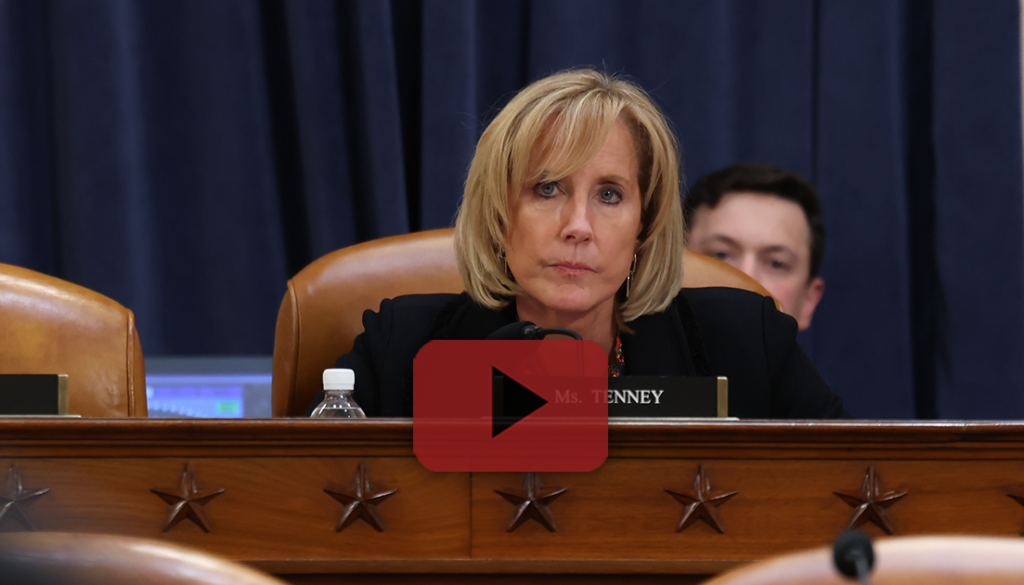
Rep. Claudia Tenney (NY-24): “If you could just drill down a little bit from a clinical perspective: what do physicians need to do to more effectively integrate the multiple disciplinary care that we need in order so nephrologists, other primary care, and everybody is managing this patient in advance, before we know that something like this is happening, so that we minimize, or at least, prolong the chance that ESRD is going to occur?”
Dr. Robert Taylor, Chief Medical Officer, DCI: “One of the most important things is identifying the underlying risk factors. Diabetes and hypertension are very common. But making sure that primary care physicians and nephrologists are screening appropriately, checking lab tests, checking urine tests to make sure you’re identifying the patients that are at highest risk.
“Unfortunately, and I’ll be honest, as a nephrologist, I make a lot more money when someone ends up on dialysis than I do caring for stage four and stage five kidney patients…Advanced kidney disease may cost Medicare [per patient] $35,000, maybe $40,000, a year. When they start dialysis, it jumps up to about $90,000 to $95,000 a year. Unfortunately, the incentives financially, and from a policy perspective, have been set up so that, as a nephrologist, you make more money, and the wheels are greased to put people on dialysis.”
Rep. Tenney: “That’s a disheartening thing to hear.”