WASHINGTON, D.C. – The United States must strengthen its trade relationships in order to break China’s grip on the critical minerals that power America’s economy, military, and nuclear arsenal, according to witnesses who appeared before the Ways and Means Committee at a hearing on improving the nation’s strategic partnerships to secure critical resources and supply chains. Members heard how emerging trade corridors and stronger partnerships in Africa and Central Asia can help the United States build resilient supply chains and compete with China and Russia.
China is the leading global producer of at least 30 of the 60 minerals the U.S. has designated as critical and controls around 90 percent of global rare earth processing capacity. Armed conflicts in mineral-rich regions, illicit trade, and a single policy decision in Beijing can each disrupt the resources American innovation and national security depend on.
The hearing follows a congressional delegation led by Chairman Jason Smith (MO-08) to Uzbekistan, Kazakhstan, and Mongolia last week, three countries squeezed between Chinese and Russian influence and looking for a strong trade partner in the United States.
America Must Show Up in Africa and Central Asia to Win the Long Game
This week, Congress passed and President Trump signed into law an extension of the African Growth and Opportunity Act (AGOA) through 2028. Beyond the immediate need to secure supply chains, there is a broader strategic case for modernization and a longer-term extension of AGOA and reforms of the Jackson-Vanik policies that govern trade relationships in Central Asia.
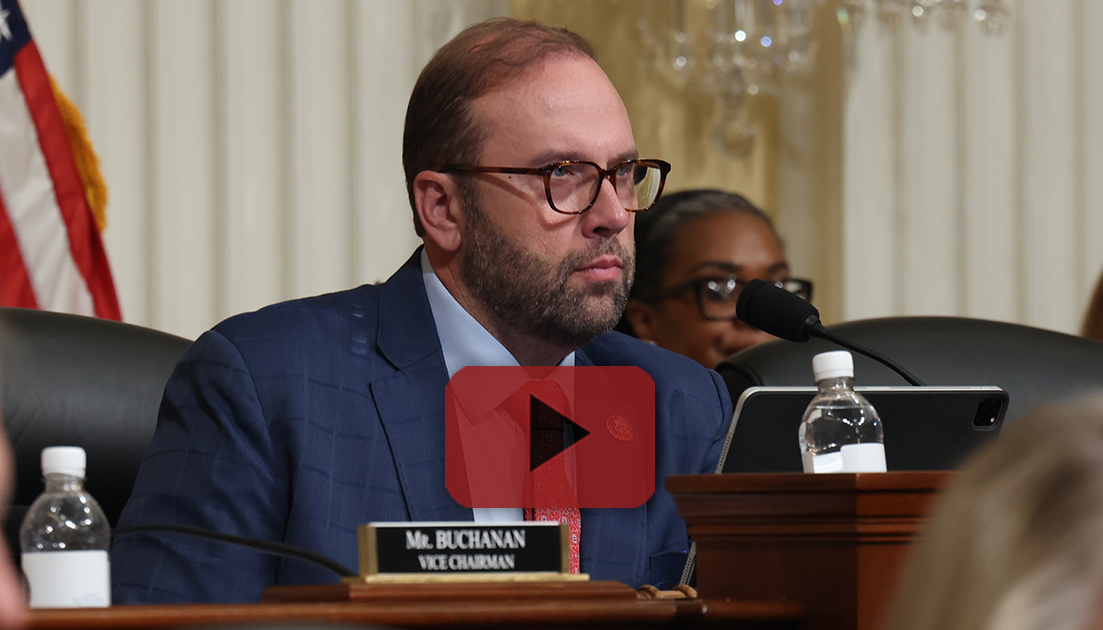
Chairman Smith: “Beyond securing our critical supply chains, what other strategic advantages would come from a long-term extension of AGOA, or changes to the Jackson Vanik status of certain countries? How can stronger trade and economic relationships in these regions help the United States build lasting partnerships, strengthen our economic security and national security, and advance our broader interests?”
Daniel F. Runde, foreign policy expert and former chair of EXIM’s Sub-Saharan Africa Advisory Committee: “Thank you, Mr. Chairman. Part of life is showing up, and so having a 10-year AGOA extension is about showing up in Africa. Africa’s got a billion people. There are going to be more Africans in Africa than Chinese citizens and Indian citizens combined in about 20 years. There’s something like 700 million cell phones in Africa right now, and a 400 million-person middle class. Extending AGOA is an affirmative step by the United States, and by this Committee, to say that we see Africa as a business opportunity…Central Asia is an enormous business opportunity, too. Yes, they have a lot of rocks, oil, and gas. They also have a lot of people, and they’re strategically located, and they want more of America. Half of life is showing up. …You have the power in this Committee to take an affirmative step to say we see Central Asia as a really important part of the world. It’s about showing up, removing irritants, and setting clear rules of the game.“
Critical Minerals Power More Than AI Data Centers: “Whoever Controls the Raw Materials is Going to Control the Future of Strategic Technology”
The critical minerals fight reaches far beyond AI data centers and into the everyday economy. For example, when rare earth export controls went into effect, the disruption rippled from Detroit’s auto industry to manufacturers in Chicago within six weeks.
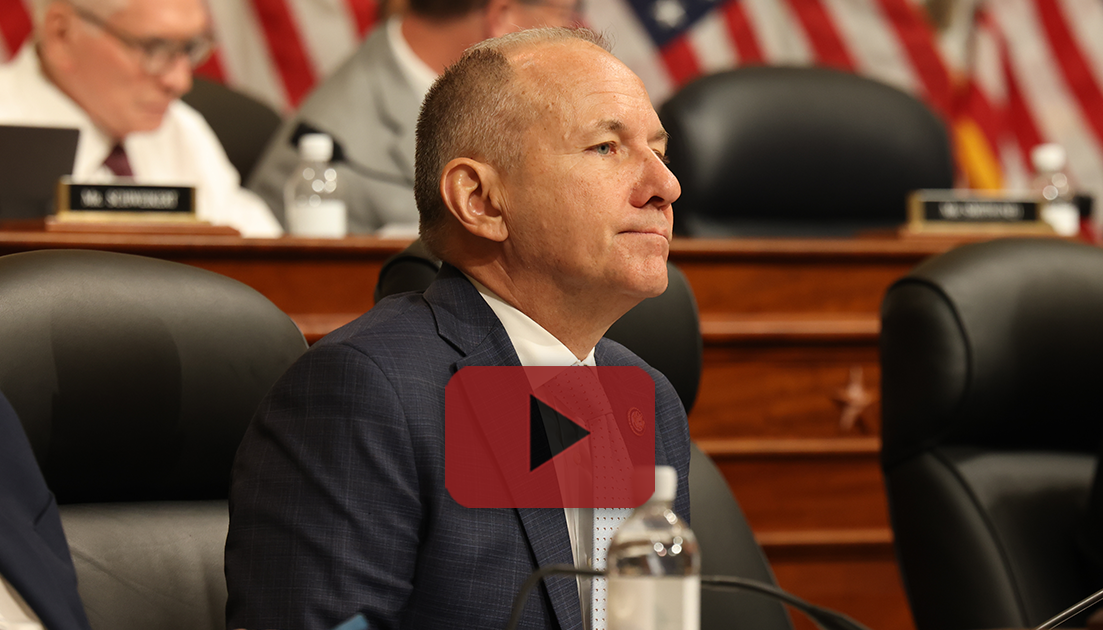
Rep. Lloyd Smucker (PA-11): “I wondered if you would just explain to someone who may be listening why this is much beyond data centers, why it’s so important.”
Dr. Gracelin Baskaran, Director, Critical Minerals Security Program, CSIS: “Whoever controls the raw materials is going to control the future of strategic technologies across the board — whether that is national security and defense technologies, energy resilience and our ability to build grids for affordable energy for Americans, or the future of American economic competitiveness through things like semiconductors. Raw materials directly impact every part of our national economic and energy security. I’m originally from Detroit, and I love our automotive manufacturing. When the rare earth export controls that went into effect hit auto manufacturing in Chicago six weeks later, we saw that end-to-end impact. Whether it’s data centers, automotive manufacturing, or agriculture and fertilizer, raw materials will control who has dominance in each of these sectors.”
New Trade Corridors Can Help America Access Central Asian Resources Without Relying on China or Russia
Central Asia’s mineral wealth does little to support the strategic interests of the United States if it cannot reach American markets. A new trade corridor taking shape in the South Caucasus would let Central Asian resources reach world markets without passing through Russia or China.
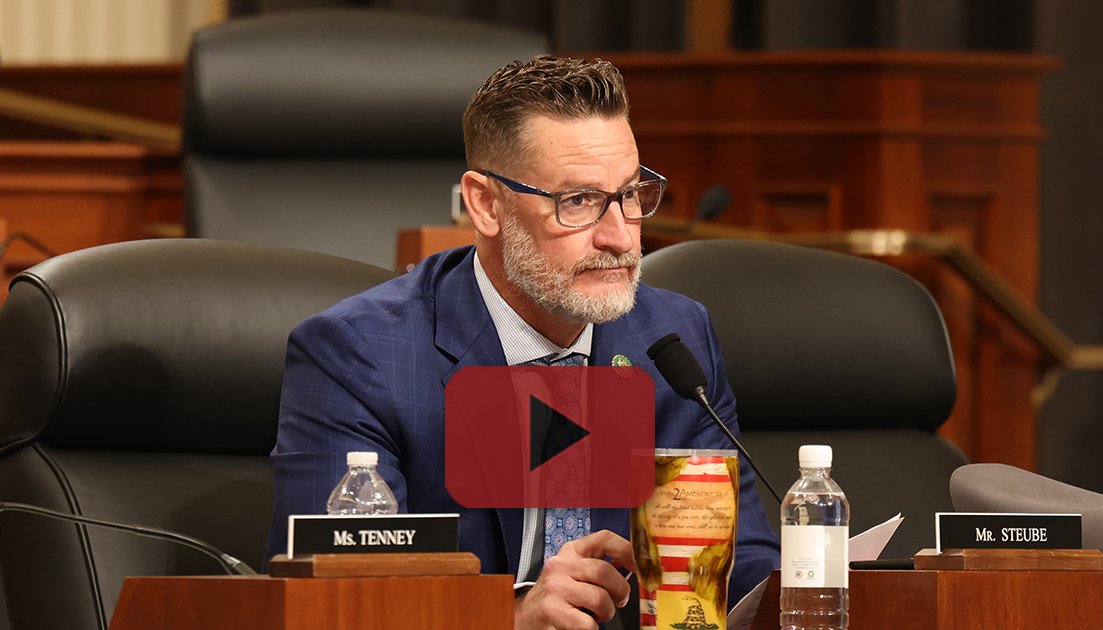
Rep. Greg Steube (FL-17): “How important is developing alternative transportation and trade routes that allow Central Asian resources to reach the United States and our allies without depending on Russia and China?”
Ambassador John Herbst, Senior Director, Atlantic Council’s Eurasia Center: “Central Asia is landlocked, and that’s their great problem. Kazakhstan has developed the concept of a Middle Corridor to get their products into and out of Europe, and now we have the Trump Corridor in the South Caucasus — a direct result of strong Administration diplomacy between Armenia and Azerbaijan, promoting peace there. This will naturally link up to the Kazakhstan Middle Corridor. This enhances peace in the South Caucasus, and the ability of Central Asian products to move to world markets without China and Russia — and the United States plays a critical role.“
From Mine to Manufactured Good: America Must Expand Critical Mineral Processing Capacity at Home and Abroad
A long-term AGOA reauthorization is an opportunity to strengthen not just America’s access to raw minerals, but its ability to process them. There are concrete steps Congress could take to build that capacity, at home and abroad.
Rep. Adrian Smith (NE-03): “In your testimony, you discuss ways that U.S. policy should balance interests in raw materials versus processed critical minerals. Can you expand on the benefits of developing trade and supply chain policy that supports this capacity, both at home and abroad? What are some specific ways this Committee could look to incorporate critical minerals policy into a long-term AGOA reauthorization?”
Dr. Gracelin Baskaran, Director, Critical Minerals Security Program, CSIS: “The principal challenge we have today is not whether critical mineral supply chains are political — we understand that across the aisle. It is making these supply chains economic. We are not competing on a level playing field. First, we need to integrate the supply chain from the mine to the manufactured good. China combined its foreign policy to secure minerals from around the world with a domestic industrial strategy to process them at home… Second, we need to support processing hubs around the world. We can’t build everything here. One of the crucial challenges to building processing capacity in sub-Saharan Africa is the shortage of energy — it drives about 40 percent of the cash cost of smelting copper, and 75 percent of the world’s population without energy sits there. If Africa can move up the value chain, they can sell to the global market instead of selling raw material back to China. Third, we need to think about longer timelines. Critical minerals is an industry that can take 25 years to develop a project, and China has the benefit of not having to yield to electoral outcomes every four years. We have democracy — democracy is a good thing — but we need to develop policy on longer horizons so our investors can develop projects with confidence.“
If America Doesn’t Engage in Central Asia, China and Russia Will Fill the Void
China and Russia sit right next door to Central Asia, a built-in advantage the United States does not have. While the U.S. is making real progress in the region, more must be done to grow America’s relationships there, starting with considering Jackson-Vanik reform.
Rep. Nathaniel Moran (TX-01): “How are China and Russia seeking to expand their influence over the Middle Corridor and Central Asian economies, and how successful is the U.S. currently in building economic and strategic partnerships in that region?”
Daniel F. Runde, foreign policy expert and former chair of EXIM’s Sub-Saharan Africa Advisory Committee: “They’re next door, so they have a lot of proximity. It’s really far away from us, and sometimes out of sight is out of mind. I give credit to several administrations — Democratic and Republican — for building attention to Central Asia, including the Trump Administration, which has a special envoy for Central Asia. This hearing is a good step in the right direction. Let’s remove Jackson-Vanik from these four countries. That would go a long way, Congressman. We have DFC, the Export-Import Bank, and a bunch of other tools. Diplomacy matters. Showing up matters. If we aren’t showing up, they’re going to fill the void.”