
WASHINGTON, D.C. – The Child Support Enforcement (CSE) program is ripe for modernization to fully benefit children and families, witnesses shared at a Ways and Means Work and Welfare Subcommittee hearing on strengthening state administration and improving access to robust child support enforcement tools. The CSE program serves more than 11 million families and covers nearly 20% of all children in the United States. The program collected nearly $26 billion in child support payments in 2024 and delivered more than four dollars to families for every dollar spent, making it one of the most cost-effective federal programs. However, the program turned 50 last year and has not seen significant reforms in nearly three decades.
Gig Economy Presents Unique Challenges for Intercepting Earnings to Collect Child Support Owed to Families
Changes in technology, remote work and the growth of the “gig” economy have reshaped the American workforce since Congress created the CSE program 50 years ago and last reformed it nearly 30 years ago. Those shifts have expanded flexibility and opportunity for many workers but have also made it more difficult for state agencies to verify income and consistently collect child support payments. Outdated polices and administrative systems now prevent the program from keeping pace with the modern labor market.
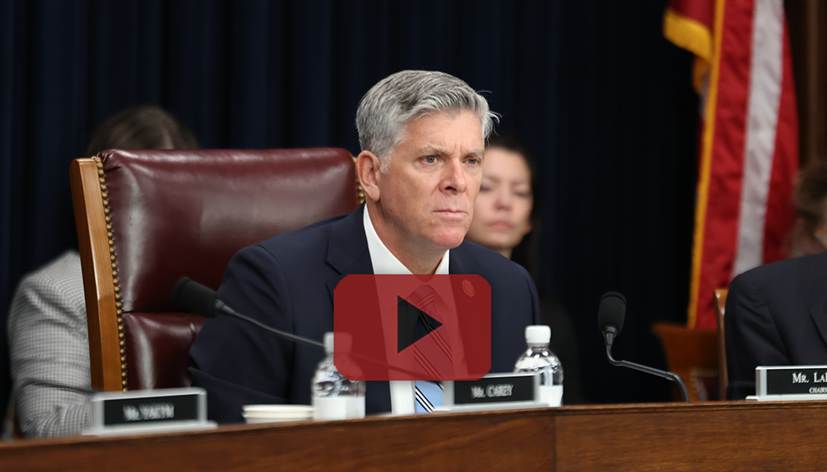
Work and Welfare Subcommittee Chairman Darin LaHood (IL-16): “How has the rise in remote work or gig work through app-based platforms made collecting child support more difficult?”
Connie Chesnik, Administrator, Wisconsin’s Division of Family and Economic Security: “People that work in the gig economy are independent contractors, so they don’t have an employer-employee relationship with an individual or company from which they are receiving payment. So, we are currently unable to use income-withholding as an enforcement tool. Income-withholding has proven to be very effective over time and well-accepted by child support payers because it makes it easy for them. The child support is withheld from their income and sent to the recipient. They don’t have to write a check, address an envelope, mail it. It’s taken care of, but it’s not something that we are able to currently do with independent contractors. We’re not trying to create an employer-employee relationship there but just simply be able to use withholding as a means of collecting support for people who work in the gig economy.”
Unaccounted For Second Jobs Hide Earnings from Child Support Collection Agencies
Modern employment arrangements like gig work make it harder to secure child support payments, and the growing number of parents holding two jobs also complicates income tracking for state agencies. Only a small share of the workforce holds multiple jobs, but nearly one in four second jobs involve independent contracting, which keeps that income hidden from traditional methods state agencies rely on to locate earnings.
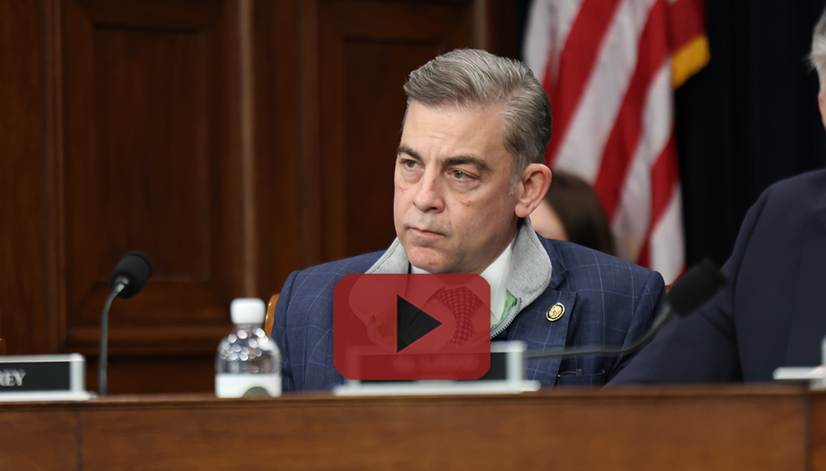
Rep. Mike Carey (OH-15): “From a statutory design, what does the current law most clearly assume of the labor market that no longer exists?”
Jessica Tollestrup, Social Policy Specialist, Congressional Research Service: “So, the child support program, as of PRWORA, had and continues to have a pretty heavy dependence on wage withholding as the primary method of order enforcement and particularly for the collection of current support. When we’re thinking about the current composition of the labor market, about 7.4 percent of workers were independent contractors in July of 2023 – which means that more than 90 percent were not independent contractors…
“But just to note further with regard to those statistics, when we’re looking at multiple job holders – so folks who hold more than one job – almost a quarter of those, that second job is via independent contracting work. So, even though it’s less than 10 percent of the total workers who have two jobs, we’re looking at child support parents that that second job is potentially income also that’s hidden from the program. So, some have looked at these patterns and suggested that the child support program needs to expand its capabilities. As it currently stands, we’re really looking at reporting into the national system of wage employees and not particularly the independent contractors.”
Coordinated Employment Services Can Aide in Successful Child Support Enforcement
Some parents cannot pay child support on time because they lack stable employment or consistent income. Simply demanding payment often does not benefit the families involved, including the child in need of resources. In Texas, a cross-agency team responsible for enforcing child support developed an innovative model to strengthen the CSE program by requiring parents to participate in employment services, an approach that has proven to have long-lasting benefits for parents and their kids.
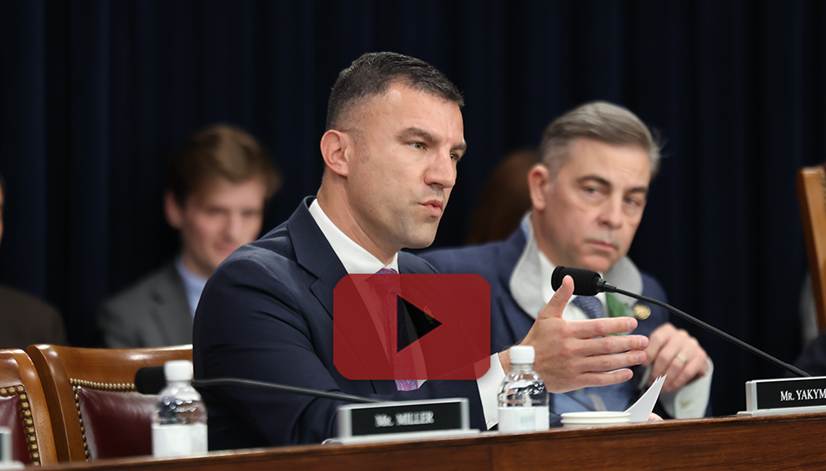
Rep. Rudy Yakym (IN-02): “Talk a little bit more about the employment side you spoke of where someone is willing to pay but unable to in terms of how that’s further shaped your approach on parental engagement.”
Ruth Anne Thornton, Director, Child Support Division within the Texas Office of the Attorney General: “The way that our program works. It is a court-ordered program where someone – if they have been unemployed or underemployed and are not paying their child support – as we progress through our enforcement actions, they would be ordered into this program where they receive enhanced employment services from the Texas Workforce Commission. This program is a partnership between our agency, the Texas Workforce Commission, local workforce development boards, and the IV-D courts. It takes all four of those partners working in synchronicity with one another to have an effective program. Each party brings to the table what they do best, and we coordinate on those individual cases to make sure that parents are receiving wrap-around services. Sometimes they receive support for wardrobe for a job interview, CDL training. Things like that to help get them into those pathways to employment. Research has shown that not only do these families during their participation in the program find work, stay employed, pay their child support, but those effects last long beyond the initial interventions.”
Bureaucratic “Silos” and Lack of Coordination Creates Confusion, Impedes Financial Stability for Families
Families navigating the child support system face not just uncertainty and financial hardship, but often encounter a lack of coordination among participating agencies. This confusion stands in the way of consistent and timely child support payments. Stronger connections between parents, children, and agency personnel will help families achieve greater economic self-sufficiency and ensure children receive the support they need.
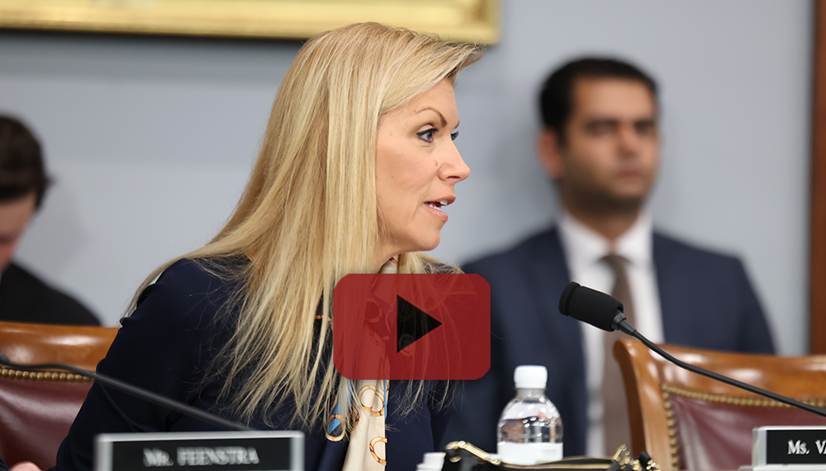
Rep. Beth Van Duyne (TX-24): “From the family’s perspective, the child support system can be obviously difficult to navigate – especially when dealing with multiple agencies, rules, and communication channels. What aspects of the system generate the most confusion or frustration for families interacting with it from your perspective?”
Connie Chesnik, Administrator, Wisconsin’s Division of Family and Economic Security: “A lot of times it involves the fact that so many agencies operate in silos, and individuals aren’t on their own going to know where to go first to get services. So, when we have the ability to connect people to other services that might help them overcome the barriers that they are facing that will help them achieve financial stability and achieve economic self-sufficiency for their families as well.”
Outdated Technology Hampers State Agencies Overburdened with Overhead
Outdated technology continues to hold back the child support program, even as policymakers and practitioners propose new ideas to modernize enforcement. Legacy computer systems require obsolete programming knowledge that is no longer even taught in schools, which slows reform efforts and creates more challenges for state administrators.
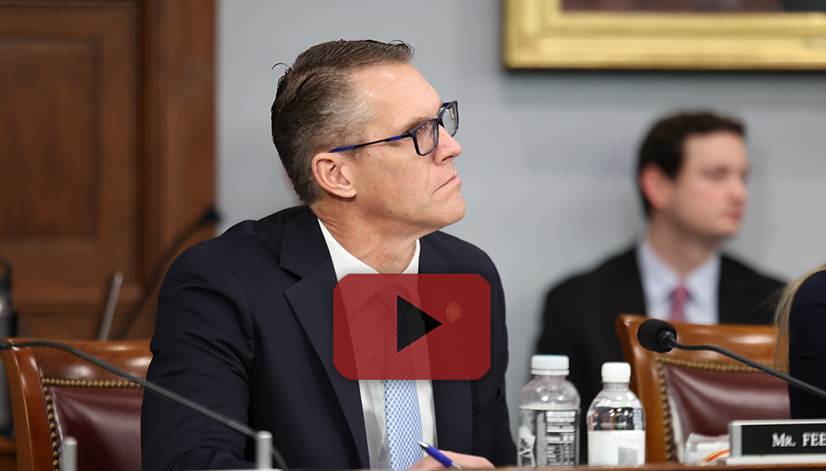
Rep. Randy Feenstra (IA-04): “We have counties and even states using legacy systems yet, and all that you have said over the last hour or so is we can do all this stuff. But it really takes an effective and efficient computer system. That becomes a problem because we don’t have that capacity. How can we move forward and what should we do to try to get these counties and states on better systems?”
Ruth Anne Thornton, Director, Child Support Division within the Texas Office of the Attorney General: “It is extremely important to move off of these legacy mainframe systems. The skillset necessary to maintain them is not even taught anymore in computer science degrees. It’s expensive, and it’s hard; and it’s complex. The states do a great job and the federal office of child support enforcement really supports our effort to skill share with one another, try to enable lessons learned. Part of the challenge is that every state is structured differently. We have different laws, different practices, different constraints. But I can only underscore the absolute importance, because we have been constrained since 1997 by a mainframe system that does not enable innovation for anything that we’ve talked about here to become successful at scale. It really does require a modern skillset and modern toolset.”